

On Friday, June 28, 2024, Carol Arcus, from the Association for Media Literacy in Canada, won the Jessie McCanse Award for Significant Contributions to the Field of Media Literacy Education. As someone fortunate enough to work alongside Carol regularly, I was keen to hear her acceptance speech.
Carol, as many modest people do when confronted by recognition of their achievements, reacted humbly. However, her comments contained important observations of what it takes to make a difference. She told one of her former students that she was “getting an award for developing a permanent dent in [her] forehead from banging [her] head against the wall in the name of change”. Carol considers herself to be a media literacy education advocate.

Advocacy isn’t glamorous. It isn’t sexy. It isn’t a one-time or short-term effort. It isn’t easy. If advocacy was an animal, it wouldn’t be a peacock or giraffe. Advocacy is grueling. It is frustrating. If advocacy was a living creature, it’d be a mosquito. Carol explained that “activism exists most robustly in the small daily ritual of holding power to account”.
Advocacy becomes even more challenging when the people in power do not understand, or even want to understand, the basic issues related to the topic. In her speech, Carol explained at length the ridiculous notions the Ontario Ministry of Education holds around what constitutes “biased texts”. (Their documents, which are part of the revised Language Curriculum, state that bias is “an opinion … or inclination that limits an individual’s …ability to make …objective judgements.”). We all have our biases. Even people who are unfamiliar with the 8 Key Concepts of Media Literacy should notice that all media contain political, social, and value messages; there is no such thing as an “unbiased” text. There were people with media literacy education experience on the curriculum rewrite team, but to those who actually hold power, their ideas on “digital citizenship” are the new and desirable “flavor of the day” that trumps actual media literacy education.
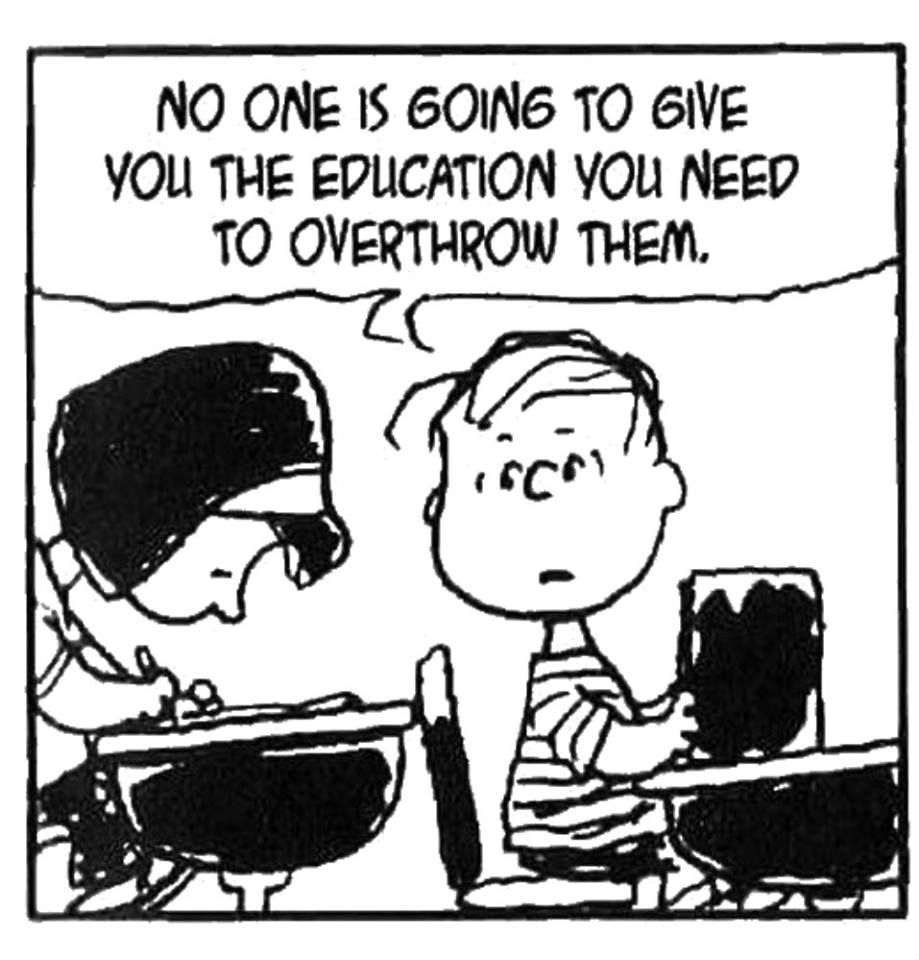
The only quibble I might make with Carol’s assertions is that this tendency to prefer a safe, bland focus on digital citizenship over media literacy skills is not exclusively the domain of governments that lean to the right of the political spectrum. It’s been quoted frequently by a doctored Peanuts cartoon (and should be attributed to Assata Shakur) but: “No one is going to give you the education you need to overthrow them”. This is true of all types of governments. After Carol’s speech, she was congratulated by conference attendees from all over the world, all of whom appreciated and understood the sentiment of struggle, regardless of their country of origin.
Carol’s speech also elevated the importance of the people who work behind the scenes. As Carol said, “media literacy activism mostly lies in the minutiae of to-do lists”. This idea celebrates people like IMLRS’s Ryan Farrington. You won’t typically find Ryan behind the podium or in the spotlight at a conference; you’ll find him previewing the conference program booklet or organizing post-conference reflections. We need all types of activists. We need thinkers and doers. We need people who are loud as well as people who are quiet. We need to embrace rather than resent and reject our to-do lists, for it is part of doing the work. There is magic in the mundane.
Resources:
- https://www.dcp.edu.gov.on.ca/en/curriculum/elementary-language/glossary#b
- https://aml.ca/resources/essential-framework/
- https://pbs.twimg.com/media/EEmb46FWsAAqBym.jpg or https://www.goodreads.com/quotes/664808-no-one-is-going-to-give-you-the-education-you or https://www.reddit.com/r/LateStageCapitalism/comments/8d5epy/you_said_it_linus/
Current Issues
- Public Commons
- Media and Information Literacy: Enriching the Teacher/Librarian Dialogue
- The International Media Literacy Research Symposium
- The Human-Algorithmic Question: A Media Literacy Education Exploration
- Education as Storytelling and the Implications for Media Literacy
- Ecomedia Literacy
- Conference Reflections


Deja un comentario